
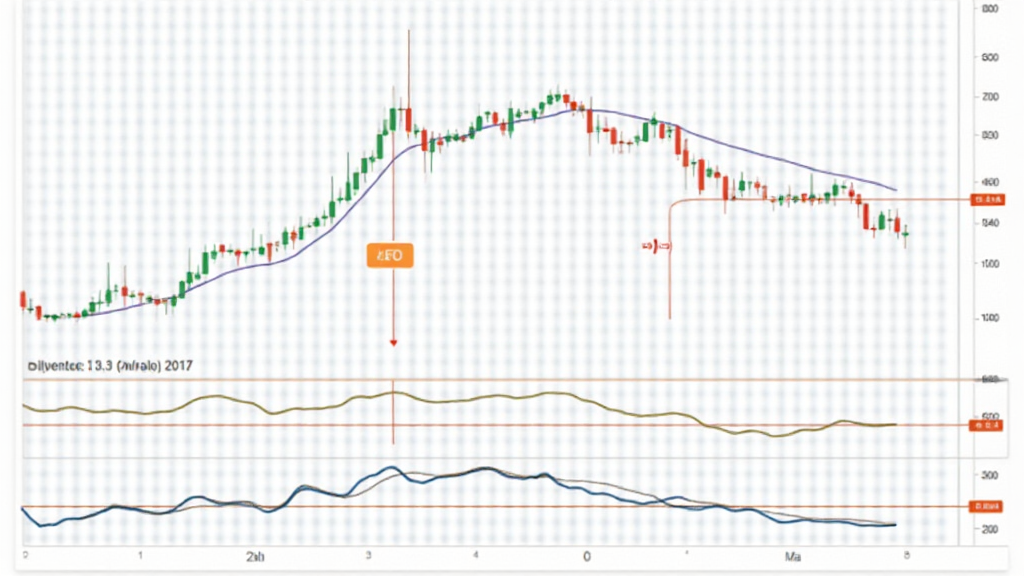


Mastering Technical Analysis Crypto Indicators
In the dynamic world of cryptocurrency trading, understanding technical analysis is not just an option; it’s a necessity. With the rapidly evolving market and the growing number of cryptocurrencies, many traders have lost as much as $4.1 billion to poor investment decisions stemming from a lack of knowledge. In 2025, more advanced and reliable analyses will guide traders to make informed decisions, enhancing their chances of success.
What exactly are technical analysis crypto indicators? Simply put, they are mathematical calculations based on the price, volume, or open interest of a cryptocurrency. Using these indicators can help traders identify market trends, anticipate future price movements, and optimize their trading strategies. This article will delve deep into the core indicators, making the complex world of crypto trading easier to navigate while adhering to Google’s EEAT standards.
The Importance of Technical Analysis in Crypto Trading
Technical analysis allows traders to decipher market sentiment effectively. By using specific indicators, they can unveil the psychology behind price movements. Here’s why it’s essential:
- **Identify Market Trends:** Spotting upward or downward trends early can significantly enhance trading strategy.
- **Improve Entry and Exit Points:** Better timing can result in maximizing profits and minimizing losses.
- **Risk Management:** Indicators equip traders with tools to set stop-loss and take-profit levels more effectively.
Key Technical Analysis Crypto Indicators
Now, let’s break down the most vital crypto indicators that every trader should understand, applying contextual frameworks that resonate with both new and experienced traders.
1. Moving Averages (MA)
Moving Averages smooth out price data, providing a clearer representation of the trend. Common types include:
- **Simple Moving Average (SMA):** Average price over a specific period.
- **Exponential Moving Average (EMA):** Places a higher weight on the most recent prices, making it more reactive to new prices.
For instance, if the 50-day SMA crosses above the 200-day SMA, it’s often regarded as a bullish signal (Golden Cross). Conversely, if it crosses below, it indicates a bearish trend (Death Cross).
2. Relative Strength Index (RSI)
The RSI measures the speed and change of price movements, oscillating between 0 and 100. Typically, readings above 70 signify that an asset is overbought, while readings below 30 suggest it’s oversold.
- Overbought Example: A trader might see an RSI of 75 and decide to sell or set tighter stops on their long positions.
- Oversold Example: An RSI at 25 indicates a good potential for a bounce back; hence, it might be a buying opportunity.
3. MACD (Moving Average Convergence Divergence)
The MACD combines momentum and trend indicators, making it powerful for forecasting price movements. It uses the convergence and divergence of two moving averages (typically the 12-day and 26-day EMA) to generate buy/sell signals.
- **Signal Line Cross:** When the MACD crosses above the signal line, it usually indicates a buy opportunity.
- **Divergence:** If prices increase while the MACD decreases, it may indicate a reversal.
4. Bollinger Bands
Developed by John Bollinger, these bands consist of three lines: the middle band (SMA), an upper band (SMA + 2 standard deviations), and a lower band (SMA – 2 standard deviations). They depict volatility:
- **Narrow Bands:** Represent low volatility, suggesting a potential breakout.
- **Wide Bands:** Indicate high volatility, which may lead to retracement opportunities.
Bollinger Bands are especially useful in volatile markets, such as altcoins or the Vietnamese crypto landscape, where users have reportedly grown by US$200 million in 2024.
5. Fibonacci Retracement
Fibonacci retracement levels are based on the key Fibonacci numbers and help identify potential reversal levels at 23.6%, 38.2%, 50%, 61.8%, and 100%. Traders apply these levels to find entry and exit points in a retracement:
- Support Level: If a price dips toward the 61.8% retracement, it might signify a strong support zone.
- Resistance Level: A pullback to the 38.2% level could present a sell point before a potential downtrend.
Integrating Indicators for Effective Trading Strategies
While each indicator provides valuable insights on its own, combining them often leads to a more effective and comprehensive trading strategy:
- **Confluence:** Look for instances where multiple indicators align to confirm a trading signal.
- **Diversity:** Don’t rely solely on one type of indicator; mixing trend indicators with momentum indicators can provide reliable signals.
- **Market Context:** Understanding overall market sentiment is key. For example, bullish signals from indicators might be ignored in a bearish market.
Traders often reference indicators in the context of local markets, such as Vietnam, where understanding local sentiment and regulatory frameworks enhances their trading experience. Here, accessing quality and timely information via hibt.com can enhance your trading arsenal.
Case Studies of Successful Technical Analysis
Several traders and institutions have seen success by combining technical analysis indicators effectively:
- **Trader A:** Utilized the RSI alongside MA crossovers to enter a long position early, netting a 60% profit in under two weeks.
- **Institution B:** Incorporated Bollinger Bands and Fibonacci levels to hedge against market downturns, protecting their portfolio during volatile periods.
These examples illustrate the potential of technical analysis to shape winning strategies and provide traders with the knowledge they need to navigate the market effectively.
Challenges and Limitations of Technical Analysis
While technical analysis can significantly improve trading strategies, it’s not without its challenges:
- **Market Noise:** Daily volatility can lead to false signals, potentially misleading traders.
- **Over-Analysis:** The danger of analyzing too many indicators can create confusion and result in suboptimal decisions.
- **Lagging Indicators:** Many indicators act based on past price movements, which might delay opportunities arising in fast markets.
It’s crucial for traders to remain cognizant of these challenges and incorporate additional research methods, such as fundamental analysis or sentiment analysis, into their strategies.
Conclusion
Mastering technical analysis crypto indicators is vital for anyone serious about navigating the cryptocurrency market successfully. By leveraging key indicators like MAs, RSI, MACD, Bollinger Bands, and Fibonacci retracement levels, traders can make informed decisions that significantly enhance their potential for profit and minimize risks.
However, while indicators are powerful tools for analyzing price movements, they should be complemented by a broader strategy that incorporates other forms of analysis and local market insights. Remember, this isn’t just about using indicators; it’s about how you apply them to your trading strategy!
Stay informed, trade wisely, and consider checking out coinmitet for more resources and insights into cryptocurrency trading.
Author: Dr. Alex Tran, a renowned blockchain technology expert, having published over 15 papers on blockchain security and led audits on prominent cryptocurrency projects.


