


Crypto Remittances in Southeast Asia: Transforming Financial Landscapes
As of 2024, remittances sent to Southeast Asia surpassed $135 billion, proving essential for millions of families across the region. Yet, with increasing transaction fees by traditional channels, how can crypto remittances offer a more efficient solution? In this article, we delve into the transformative potential of crypto remittances in Southeast Asia.
The Rise of Crypto Remittances
Globally, remittances have been a lifeline for countries reliant on overseas workers. Southeast Asia, comprising countries like Vietnam, Indonesia, and the Philippines, represents a substantial share of the global remittance market. According to the World Bank, remittances to the region are expected to grow by 8% annually.
Why are people turning to crypto for remittances? The **key reasons include:**
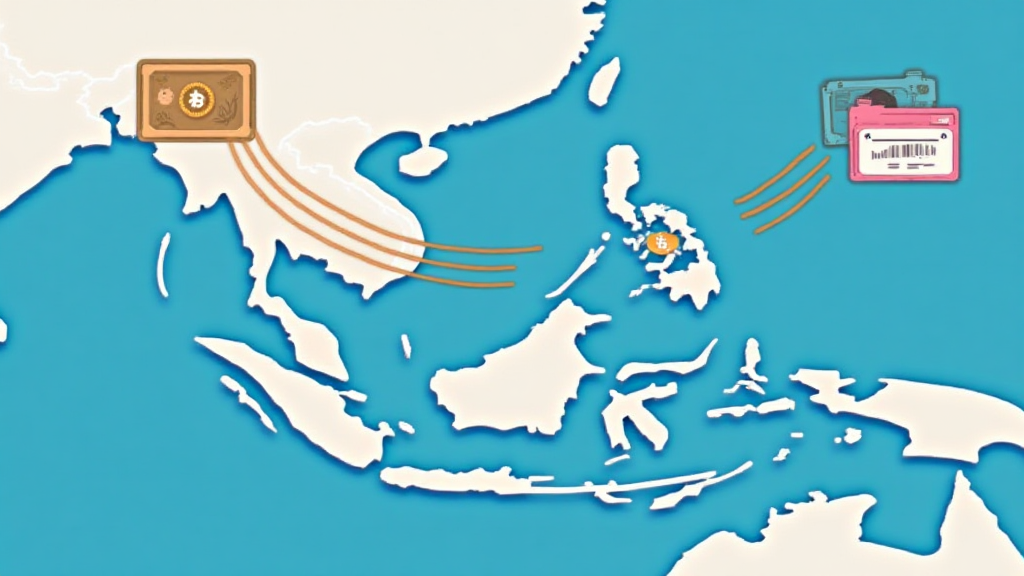
- Lower Fees: Transaction costs can reduce significantly with cryptocurrencies compared to traditional banking methods. For instance, while traditional services may charge 7% fees, crypto transfer fees can go as low as 0.5%.
- Speed: Transactions can occur within minutes rather than the days typically needed by conventional banking institutions.
- Accessibility: Millions in Southeast Asia lack access to banking facilities, and crypto provides an opportunity for financial inclusion.
How Do Crypto Remittances Work?
At its core, crypto remittances operate by converting fiat currency into cryptocurrency, transferring it, and then converting it back to fiat. This process can be visualized as:
- Step 1: The sender purchases cryptocurrency through a platform.
- Step 2: The cryptocurrency is sent to the recipient’s digital wallet.
- Step 3: The recipient converts the cryptocurrency back to local fiat currency.
This method not only reduces the time and money spent on remittances but also gives users the potential to leverage the rising value of cryptocurrencies.
Challenges in Adoption
Despite the advantages, challenges remain in the wide adoption of crypto remittances within Southeast Asia:
- Regulatory Hurdles: Different countries have varying regulations on cryptocurrencies, which creates confusion and affects user confidence.
- Volatility: The fluctuating nature of cryptocurrencies can deter users who fear losing money during transfer.
- Technical Barriers: Not all users are tech-savvy; education and resources are needed to help them understand how to use crypto for remittances.
The Vietnamese Market Potential
Vietnam has been experiencing a rapid increase in cryptocurrency adoption. Recent studies indicated that about **21%** of Vietnamese adults have used cryptocurrencies for various purposes, including remittances. Furthermore, an approximate **38%** of Vietnamese expect to receive cryptocurrency remittances in 2025.
Factors contributing to this growth include:
- Young Population: With a median age of just 30 years, Vietnam’s tech-savvy youth are quick to embrace new technologies.
- Growing Diaspora: Millions of Vietnamese work abroad, driving demand for faster, cheaper remittance methods.
Key Data: A recent survey showed that **78%** of Vietnamese respondents believe that cryptocurrencies promise a more secure transfer of funds.
Security Measures for Crypto Remittances
Security in crypto transactions remains a central concern. Blockchain technology provides a transparent and secure method for transferring values, primarily due to its decentralized nature. However, users must also adopt protective measures, such as:
- Utilizing wallets with advanced security features.
- Regularly updating software to protect against hacks.
- Employing two-factor authentication for added security.
In the context of Vietnam, the phrase “tiêu chuẩn an ninh blockchain” (Blockchain Security Standards) is gaining traction, emphasizing the importance of secure crypto transactions.
Future of Crypto Remittances in Southeast Asia
As we look to the future, the crypto remittance market in Southeast Asia is set to grow significantly. By 2025, the total transaction volume through crypto remittances could reach an astonishing **$20 billion**, according to industry forecasts.
Innovations such as decentralized finance (DeFi) platforms and stablecoins will likely play a crucial role in further enhancing user experiences. Users will have more control over their funds, alongside smart contracts ensuring secure transactions.
Moreover, the demand for local exchanges is surging. Providing localized services will help build trust and accessibility among users. Combine that with a robust regulatory landscape, and the potential for crypto remittances becomes astronomical.
Conclusion
In conclusion, the rise of crypto remittances in Southeast Asia represents a major shift in how individuals transfer money across borders. As demonstrated, the benefits significantly outweigh the challenges, especially as technology continues to evolve.
In a region characterized by vast potential, it’s imperative for stakeholders—be it governments, businesses, or entrepreneurs—to recognize and harness the power of cryptocurrencies. The digital revolution is here, reshaping financial landscapes for generations to come. So, will you be part of this transformation?
For comprehensive guides on crypto practices, don’t forget to check out hibt.com. By staying informed, you can make empowered financial decisions.
Written by Dr. Nguyen Thanh, a renowned authority on cryptocurrency with over 20 published papers and experience auditing various blockchain projects.


