


Global Stablecoin Regulations: Navigating the Compliance Landscape
With the rapid rise of stablecoins, which now account for over $150 billion in market cap globally, understanding the regulatory landscape has become imperative for industry participants. Recently, concerns about their implications for financial stability and consumer protection have led to heightened scrutiny from regulators worldwide. This article aims to demystify the complex web of stablecoin regulations across the globe, especially in regions like Southeast Asia, where the adoption of cryptocurrencies is surging.
The Rise of Stablecoins and Their Importance
Stablecoins, as cryptocurrencies pegged to traditional fiat currencies, provide a crucial bridge to traditional finance. Unlike volatile digital assets like Bitcoin, stablecoins like USDC and Tether offer stability, making them a preferred choice for many users, especially in markets which struggle with local currency fluctuations. According to a report from hibt.com, usage in Southeast Asia, particularly in Vietnam, has surged, with reports indicating a growth rate of over 60% in stablecoin transactions among local users in 2023.
Global Regulatory Trends
As stablecoins gain traction, regulatory frameworks are evolving across different jurisdictions. Here’s a summary of key trends:
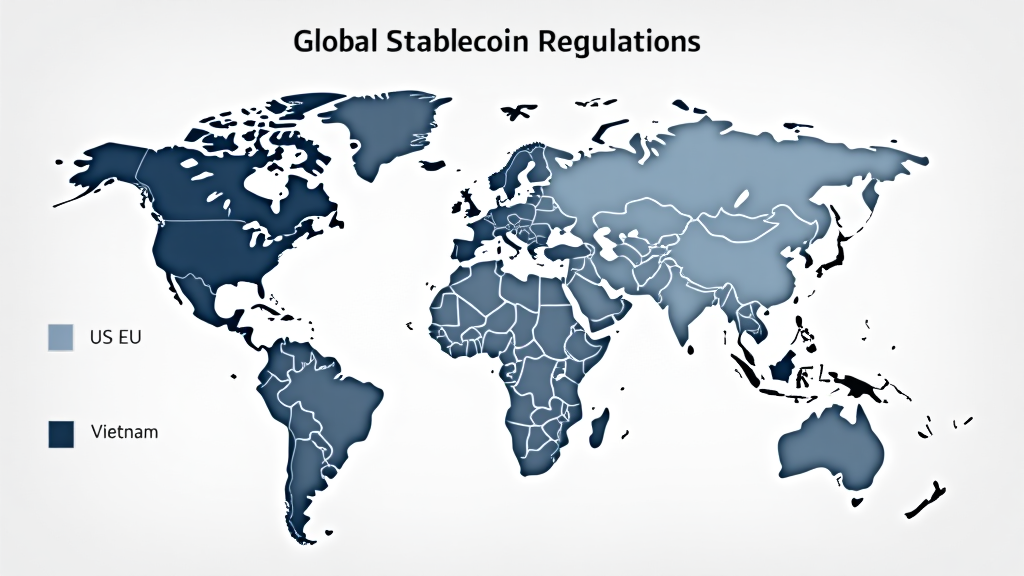
- Europe: The European Union has proposed the Markets in Crypto-Assets (MiCA) regulation, designed to provide a comprehensive regulatory framework for all crypto assets, including stablecoins. This regulation aims to enhance transparency and consumer protection while fostering innovation.
- United States: Regulatory bodies like the SEC and CFTC have been actively evaluating stablecoins. Recent hearings emphasize the need for clear definitions and regulations to mitigate risks related to financial stability.
- Asia-Pacific: Countries like Singapore and Japan are leading in establishing clear guidelines. In Vietnam, the central bank has begun drafting regulations focusing on digital currencies, aiming to promote blockchain adoption while ensuring consumer protection.
Challenges Faced by Regulators
Regulators face numerous challenges, including:
- Technological Complexity: Understanding the underlying blockchain technology and various algorithms used by stablecoins is critical.
- International Coordination: The borderless nature of cryptocurrencies requires jurisdictions to work together to prevent regulatory arbitrage.
- Consumer Awareness: Educating consumers on the risks associated with cryptocurrencies and the importance of regulatory compliance is essential.
Case Studies of Global Regulation
A closer look at specific regulatory actions can illuminate trends and the future of stablecoin regulations:
United States
The SEC’s Chair has indicated that stablecoins might be classified as securities under certain conditions. An active dialogue is ongoing to define what constitutes a stablecoin and how these should be regulated. This could significantly impact stablecoin operators within the U.S.
European Union
Under the MiCA framework, new stablecoin issuers will be required to provide a more significant amount of collateral, enhancing consumer confidence and reducing the risk of crises similar to those seen in the past.
Vietnam
The Vietnamese government has initiated discussions regarding regulation, revealing plans to implement standards that ensure consumer protection while promoting fintech development. Much like how traditional banks are regulated, stablecoin operations in Vietnam will soon face scrutiny aimed at protecting users.
Future Trends in Stablecoin Regulations
Looking ahead, the following trends may shape the landscape:
- Institutional Adoption: As more traditional financial institutions embrace stablecoins for their operational benefits, regulatory frameworks will likely adapt to accommodate their needs while maintaining consumer protections.
- Increased Transparency: Regulators will likely demand greater transparency from stablecoin issuers regarding their reserves and operational procedures to ensure that they can withstand economic shocks.
- Consumer Protection: Policies will continue to evolve to safeguard consumer assets, perhaps taking cues from existing frameworks in traditional finance.
Concluding Thoughts
Stablecoin regulations are a rapidly evolving area in the cryptocurrency sector, and participants must remain vigilant and informed. As seen in the various global economies, every region is adapting its strategy to ensure that stablecoins contribute to financial stability while fostering innovation. For users in Vietnam and beyond, understanding these regulations can ultimately lead to safer, more efficient cryptocurrency transactions.
In conclusion, as the industry matures, compliance with these regulations will not just be a legal obligation but a crucial aspect of building trust and credibility in the fast-evolving world of digital assets. For more insights on navigating the complex world of regulations, visit coinmitet.


